


Eresus Walckenaeri "Orange Ring" - Velvet Spider
Eresus Walckenaeri "Orange Ring" - Velvet Spider
5.0 / 5.0
(2) 2 total reviews
Couldn't load pickup availability
Orange Ring Velvet Spider (Eresus walckenaeri)
Stage: Spiderling (approx. 5mm) | Origin: Captive Bred
The Velvet Advantage
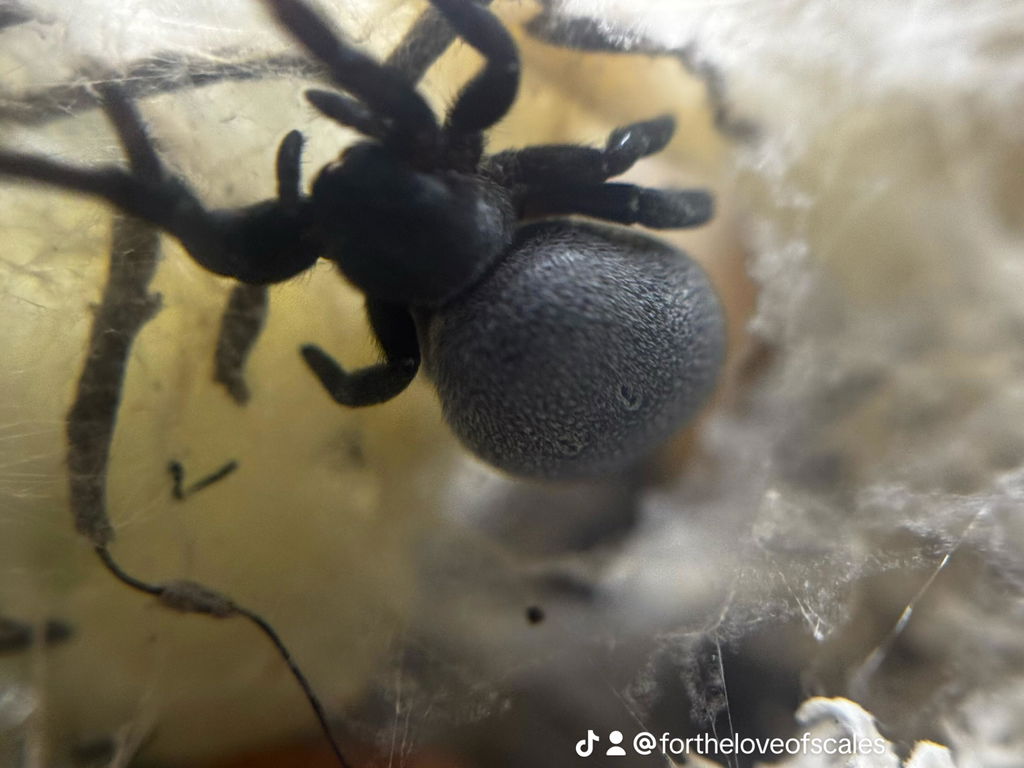
- Velvety Aesthetics: Covered in dense, microscopic hairs that give them a matte, velvet appearance — famously “softer” looking than almost any other arachnid.
- The “Orange Ring”: As the name suggests, females of this species develop a striking, vibrant orange-to-red ring on their abdomen as adults, providing a stunning contrast against their jet-black body.
- Impressive Longevity: While jumping spiders are short-lived, a female Eresus can live for 5 to 10 years — a true long-term companion for your collection.
- Fascinating Behaviour: Subterranean engineers — they build a silk-lined burrow with a “trip-wire” canopy at the entrance to catch passing prey, rather than hunting in the open.
Specifics for Juveniles
- Appearance: At this stage, they are small, stocky, and starting to develop their signature velvety texture. The “Orange Ring” becomes more pronounced as they reach sub-adult stages.
- Current Diet: Feeding reliably on Drosophila hydei (large fruit flies). Unlike jumping spiders, they prefer ground-dwelling prey.
- Temperament: Generally very docile and slow-moving. They do not jump — they prefer to retreat into their burrows when disturbed.
- Sexing: Sold as unsexed.
UK Care Requirements (Important: Arid Species)
| Parameter | Requirement |
|---|---|
| Humidity | Dry — no misting ever. All moisture comes from prey. |
| Temperature | 23°C – 28°C |
| Lighting | No special lighting required — natural day/night cycle is fine |
| Ventilation | Good ventilation essential — avoid stagnant air |
| Enclosure Type | Terrestrial/arid — floor space and burrowing depth prioritised |
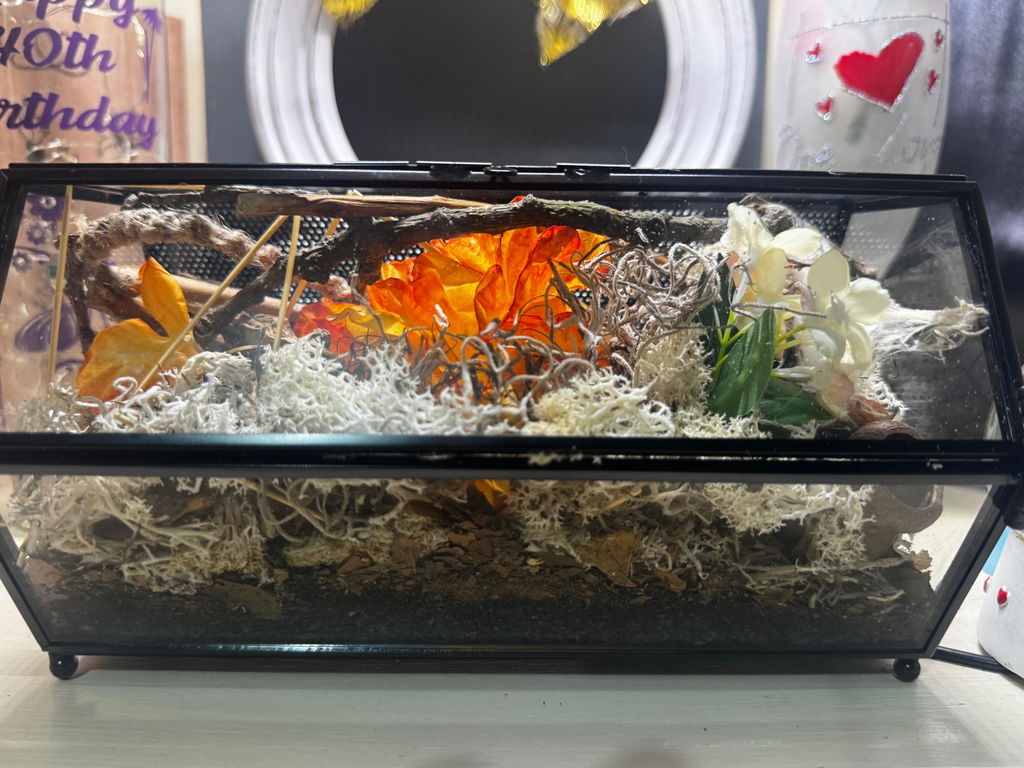
| Substrate | Dry moss and artificial plants for web anchor points |
Feeding & Growth
- Current Diet: Feeding reliably on Drosophila hydei (large fruit flies).
- Next Stage: At around 10mm, they can transition to Green Bottle flies.
- Hunting Style: Ambush predators — they wait inside their silk-lined burrow for vibrations from passing prey, then strike from the entrance. Feeding is best done by placing prey directly at the burrow entrance.
- Feeding Frequency: Every 5–7 days is sufficient. They have a slow metabolism compared to jumping spiders and do not need daily feeding.
Important Shipping Update
We dispatch all live spiders exclusively via Royal Mail Special Delivery (Guaranteed by 1pm). The welfare of our spiders is our absolute priority:
- Reliability: Special Delivery bypasses the standard post, minimising time in the mail system.
- Priority Handling: Your spider won’t be left sitting in a delivery office during a backlog.
- Reduced Stress: A faster journey means your spider arrives healthy, hydrated, and ready for their new home.
Please Note: To avoid your spider being held in a sorting office over the weekend, we only post orders from Monday to Thursday.
Velvet Spider Starter Dome Enclosure
Give your new velvet spider the perfect head start with our custom-designed temporary enclosures. These orb-style habitats are specifically curated to meet the needs of velvet slings, providing a secure, ventilated, and aesthetically pleasing home. Note: enclosure designs vary.
- Bio-Inspired Decor: Each enclosure features a unique mix of natural preserved mosses, providing essential texture for web-building.
- Vibrant Accents: Decorated with high-quality artificial plants and floral accents for a pop of colour without the maintenance of live flora.
- Optimal Airflow: Fitted with a 3D-printed ventilated lid to ensure consistent air exchange while preventing escapes.
- Compact & Clear: The spherical design offers a 360° view of your velvet spider’s behaviour and growth.
Note: These are temporary habitats designed for spiderlings. As your velvet spider matures, they will eventually require a larger permanent enclosure.
📷 Representative Image
Please Note: The main image displays a mature adult. Your juvenile will arrive as a small, velvety black spider. The iconic orange ring and impressive adult size will develop slowly over several moults. Velvet spiders are slow growers, but the wait is well worth it!
❓ Frequently Asked Questions
What is the Orange Ring Velvet Spider?
Eresus walckenaeri is a European velvet spider prized for the striking orange-to-red ring that females develop on their abdomen as adults. They are members of the Eresidae family — the same family as the African velvet spider — and share the same matte, velvety appearance and long lifespan.
Are Orange Ring Velvet Spiders good for beginners?
Yes — they are docile, slow-moving, and very low maintenance. They require no misting, no special lighting, and are very forgiving of minor husbandry errors. Their calm temperament makes them an excellent first exotic spider.
Do they need water or misting?
No — Eresus walckenaeri are an arid species that get all their moisture from their prey. Never mist their enclosure. Damp conditions can be harmful to their health.
When will the orange ring appear?
The orange ring develops gradually as the spider grows. It becomes more pronounced at the sub-adult stage and reaches its full vibrant colour in adult females. The wait is part of the excitement!
What do they eat?
Spiderlings feed on Drosophila hydei (large fruit flies). Once they reach around 10mm, they can transition to Green Bottle flies. They are ambush predators that hunt from within their silk burrows, so place prey directly at the burrow entrance.
How long do they live?
Female Eresus walckenaeri can live for 5–10 years, making them one of the longest-lived exotic spiders available in the UK hobby. They are a true long-term companion.
Is it legal to keep Eresus walckenaeri in the UK?
Yes — Eresus walckenaeri is not a protected or restricted species under UK law. No licence is required to keep or purchase them. All our spiders are captive bred, so there are no import or CITES concerns.
Share


- 5 stars: 2 (100%)
- 4 stars: 0 (0%)
- 3 stars: 0 (0%)
- 2 stars: 0 (0%)
- 1 star: 0 (0%)
From the very start, I got lots of support. The home Peter Parker came in was perfect whilst I built his forever home. Had him 8months now & he’s settled in to his forever enclosure. Meaning I’m ready for my next.
It is great to receive spiders that are fit and healthy. The great feeling that they are being supplied by someone that cares. Good communication and well packaged. I would certainly recommend. Most likely where I am going to look for my next purchase.